Leave Your Message

What Is Temporary Wallpaper and How Does It Work?

Temporary Wallpaper offers a practical way to refresh a room without committing to permanent wall coverings. It usually has a decorative printed surface and a pressure-sensitive adhesive backing. This backing sticks to smooth walls, yet can often be removed by peeling it away slowly. The process sounds simple. Preparation matters more.

In real rooms, results depend on the wall surface, humidity, temperature, and installation technique. Clean, dry, lightly painted walls usually provide the best foundation. Dust, grease, textured paint, or fresh paint may reduce adhesion. A small test area can reveal problems before the full installation begins. That step is easy to skip. It should not be.

This guide explains what Temporary Wallpaper is, how its adhesive works, and where it performs best. It also considers removal, reuse, maintenance, and common installation mistakes. Manufacturer instructions remain important because adhesive formulas differ between products. Even experienced decorators may see bubbles, lifted edges, or slight pattern shifts. These issues are not always signs of poor quality. They may reflect uneven walls or rushed preparation.

The word “temporary” can also be misleading. Some products remove cleanly, while others may leave residue or affect delicate paint. A careful approach protects both the wallpaper and the wall beneath it. By understanding the material before buying, homeowners, renters, and designers can make more reliable decisions. The goal is not merely a quick visual change. It is a controlled update that remains practical in everyday living spaces.
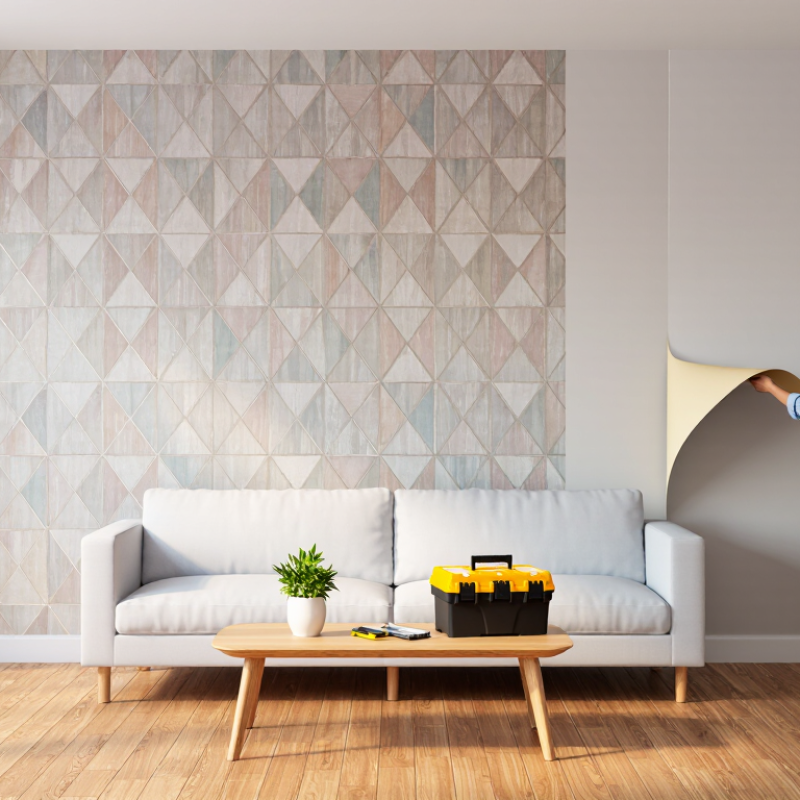
What Is Temporary Wallpaper and How Does It Work?

What Is Temporary Wallpaper and What Is It Made Of?

Temporary wallpaper is a decorative wall covering designed for short-term changes. Unlike traditional wallpaper, it uses pressure-sensitive adhesive instead of paste. You press it onto a clean surface, then peel it away when the room needs a new look. The material usually combines a printed face layer, flexible backing, and removable adhesive. Some products use vinyl for moisture resistance. Others use polyester fabric or nonwoven fibers for a softer feel. It is not simply paper. That distinction matters.

The face layer carries color and texture. Water-based or low-odor inks are common, although formulas vary between manufacturers. A release liner protects the adhesive before installation. Peel it back gradually. The adhesive must hold firmly but release without tearing the wall’s paint. Temperature, pressure, wall age, and surface condition all affect performance. Smooth, sealed drywall usually provides better results. Dusty, damp, freshly painted, or textured walls may cause bubbles, weak adhesion, or residue.

I have found that slow installation matters more than force. Align a small section, then smooth outward with a soft squeegee. Check for trapped air. If a corner lifts, avoid pressing it down repeatedly; dust may already be underneath. Temporary does not mean completely harmless. Poorly bonded paint can still peel away. A hidden patch test for several days offers more reliable evidence than a product claim. Even then, results can vary. That uncertainty deserves attention before covering an entire room.
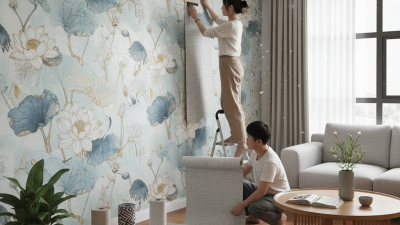

How Does Temporary Wallpaper Adhere to Walls?

What Is Temporary Wallpaper and How Does It Work?

Temporary wallpaper uses a pressure-sensitive adhesive instead of traditional paste. The adhesive stays flexible beneath the printed surface. When you press the sheet against a wall, pressure activates the bond. Smooth contact helps it grip without permanently soaking into the paint.

The wall must be clean, dry, and reasonably flat. Dust can create tiny gaps beneath the material. Moisture may weaken the adhesive over time. Textured walls are especially difficult because raised patterns reduce contact. Fresh paint can also cause problems if it has not fully cured. A small test patch is a sensible step. It sounds simple, but it is not foolproof. Removal usually works best when you pull slowly at a low angle. Pulling quickly may lift weak paint or leave adhesive residue.

Tips: Wipe the wall with a dry microfiber cloth, then check for grease or loose paint. Avoid applying sheets over damp areas or damaged surfaces. Press from the center outward with a soft squeegee. If bubbles appear, lift the nearest edge gently and smooth it again. Do not stretch the material too much. It may shrink slightly later, and the seams can become visible.

How to Measure, Prepare, and Install Temporary Wallpaper

Temporary wallpaper is a decorative covering with a pressure-sensitive adhesive backing. Unlike traditional wallpaper, it usually installs without paste or water. Its removability depends on the wall surface, adhesive quality, temperature, and removal technique.

Before buying, measure each wall separately. Multiply wall width by height, then subtract only large openings. Add 10% for trimming, pattern matching, and mistakes. Check the product’s pattern repeat, because repeated designs create extra waste.

The Joint Center for Housing Studies projected annual U.S. homeowner improvement and maintenance spending to approach 450 billion dollars by early 2025. That spending trend supports careful, lower-commitment upgrades.

Measure twice. Buy one extra roll when possible.

Preparation controls most installation problems. Clean the wall with a mild solution, remove dust, and let it dry completely. Patch holes and sand rough areas smooth. Glossy paint may need light abrasion, but test a small hidden section first.

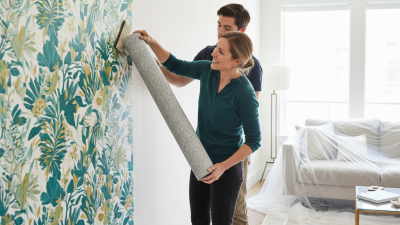
Mark a straight vertical line near the wall’s edge. Peel only 10 to 15 centimeters of backing at a time. Press the material downward with a soft squeegee, not your fingernails. Butt seams unless the instructions allow overlapping. Work slowly.

A tiny bubble can remain. Chasing every flaw may create a crease. If the first panel leans, stop early and reposition it. Remove the wallpaper slowly, keeping it close to the wall.

The 2024 Houzz & Home Study shows continued homeowner investment in interior improvements, but attractive results still depend on preparation, not speed.

How to Remove and Reuse Temporary Wallpaper

Temporary wallpaper uses a pressure-sensitive adhesive instead of permanent paste. It sticks when pressed onto a smooth, clean surface. Many sheets can be repositioned during installation. They are not completely risk-free, though.

For removal, warm the room slightly and lift one corner with a fingernail or plastic card. Pull the sheet slowly, keeping it close and parallel to the wall. Do not yank it outward. That can remove paint or leave adhesive behind. If the paper resists, pause and warm the area with a hair dryer on a low setting. Test a hidden section first, especially on freshly painted or textured walls. Walls need time to cure.

Store it carefully. Maybe it can be reused. Keep the original backing sheet and place the adhesive side against it without trapping folds. Roll the wallpaper loosely, pattern facing outward, and store it flat in a cool, dry place. Dust, lint, and stretched edges may reduce its grip. Some temporary wallpaper tolerates one careful reuse, while other types are designed for a single application. Check the product instructions before removing it. In practice, reuse works best when the sheet comes off cleanly and the wall remains smooth. A small crease can become a visible ridge later.

Temporary Wallpaper: Typical DIY Time for Application and Removal

For a small accent wall of approximately 10 m², application and removal commonly involve measuring, positioning, smoothing, peeling, and surface cleaning. The times shown are practical planning estimates and can vary with wall condition, panel size, and the amount of adhesive residue.

What Are the Benefits and Limitations of Temporary Wallpaper?

Temporary wallpaper uses a pressure-sensitive adhesive instead of permanent paste. You peel away its backing, align the first strip, and smooth it with a plastic squeegee. The film can usually be removed without soaking the wall. It suits renters, nurseries, and short-term styling projects.

The benefits are practical. Installation creates little dust, needs fewer tools, and allows pattern changes in an afternoon. The 2024 Improving America’s Housing report from Harvard’s Joint Center for Housing Studies valued U.S. remodeling spending at about $472 billion in 2022. That scale reflects strong demand for manageable home updates. Temporary wallpaper can support that demand, especially for people avoiding permanent work. Small mistakes are often correctable.

Not every wall is a good candidate.

Adhesion weakens on dusty, textured, damp, or freshly painted surfaces. Direct sunlight may fade printed colors, while bathroom humidity can lift edges. In my experience, corners need extra pressure after installation, and removal is not always perfectly clean. Paint may peel if it has poor adhesion already. The U.S. Environmental Protection Agency reports that indoor pollutant levels can be two to five times higher than outdoor levels, so low-emission materials and ventilation deserve attention. A 2024 indoor-air product report from an independent certification body also emphasizes testing emissions, not assuming “removable” means chemical-free. Test one hidden section for 48 hours. That small step prevents expensive disappointment.

What Is Temporary Wallpaper and How Does It Work? - What Are the Benefits and Limitations of Temporary Wallpaper?

Dimension How Temporary Wallpaper Compares Practical Considerations
Definition Temporary wallpaper is a decorative wall covering designed to be applied and removed without the paste-based installation used by traditional wallpaper. It is commonly available as peel-and-stick sheets or panels with a pressure-sensitive adhesive backing.
How It Works The backing is peeled away to expose adhesive, and the panel is pressed onto a clean, smooth surface. Installation generally requires careful alignment and smoothing to reduce bubbles, creases, and visible seams.
Installation Time It can usually be installed more quickly than traditional wallpaper because it does not require wet paste, soaking, or extended drying time. The total time depends on wall size, pattern matching, cutting, and the installer’s experience.
Removal Many products can be peeled away by hand without water or chemical wallpaper remover. Removal is not guaranteed to be damage-free. Weak paint, poorly bonded surfaces, or prolonged use may result in residue or lifted paint.
Best Surface Smooth, clean, dry, and properly cured painted walls generally provide the most reliable adhesion. Dust, grease, moisture, rough texture, loose paint, and heavy wall irregularities can reduce adhesion and affect the appearance.
Repositioning Some products can be lifted and repositioned during installation before the adhesive fully settles. Repeated repositioning can weaken adhesion, stretch the material, or damage the edge of a panel.
Durability It is intended for temporary or flexible decorating applications rather than permanent wall treatment. Heat, humidity, direct sunlight, frequent contact, and poor surface preparation may shorten its service life.
Main Benefits It offers quick visual updates, a wide range of patterns, and a lower-commitment alternative to permanent wallpaper. It can be useful for renters, temporary interiors, accent walls, seasonal decoration, and testing a design before committing.
Main Limitations It may cost more per covered area than some traditional wallpaper options and may not adhere well to every wall type. Seams, air bubbles, shrinking, peeling edges, and color fading can occur if the product or installation conditions are unsuitable.
Moisture Resistance Moisture resistance varies by material and product construction; temporary wallpaper should not automatically be treated as waterproof. Bathrooms, kitchens, and other humid areas require a product specifically rated for those conditions and careful installation away from direct water.
Recommended Preparation Clean the wall, remove dust and grease, repair major imperfections, allow fresh paint to cure, and test a small area first. Always follow the product’s instructions because adhesive strength, removal behavior, surface compatibility, and cleaning guidance differ among materials.

Note: Temporary wallpaper performance depends on the specific material, adhesive, wall condition, temperature, humidity, and length of installation.