Foam Tiles are used to make hard floors more comfortable, cushioned, and practical for everyday activities. In a home gym, they can soften the feel beneath exercise equipment and reduce discomfort during floor workouts. In playrooms, interlocking tiles create a padded surface for children, though they do not replace adult supervision or age-appropriate safety measures. Garages, workshops, and classrooms may also benefit from tiles that help protect floors from minor scuffs and provide a more comfortable place to stand.
Their performance depends on details that are easy to overlook. Tile thickness, density, surface texture, and material affect grip, cleaning, durability, and cushioning. A smooth tile may wipe clean quickly, while a textured surface can feel steadier underfoot. Foam Tiles can also lessen some impact and soften footsteps, but they should not be described as complete soundproofing. Small differences matter.
Choosing the right tiles starts with the room and the activity. Check the manufacturer’s guidance for suitable surfaces, weight limits, cleaning methods, and exposure to heat or moisture. Measure the area before buying; gaps and awkward edges can make a neat-looking floor frustrating to use. It is also worth checking that the tiles stay joined during movement. They are useful, not perfect. Foam can compress or wear over time, and a cushioned floor may feel less stable for certain exercises or equipment. Understanding these trade-offs helps set realistic expectations and makes it easier to decide where Foam Tiles are a sensible fit.
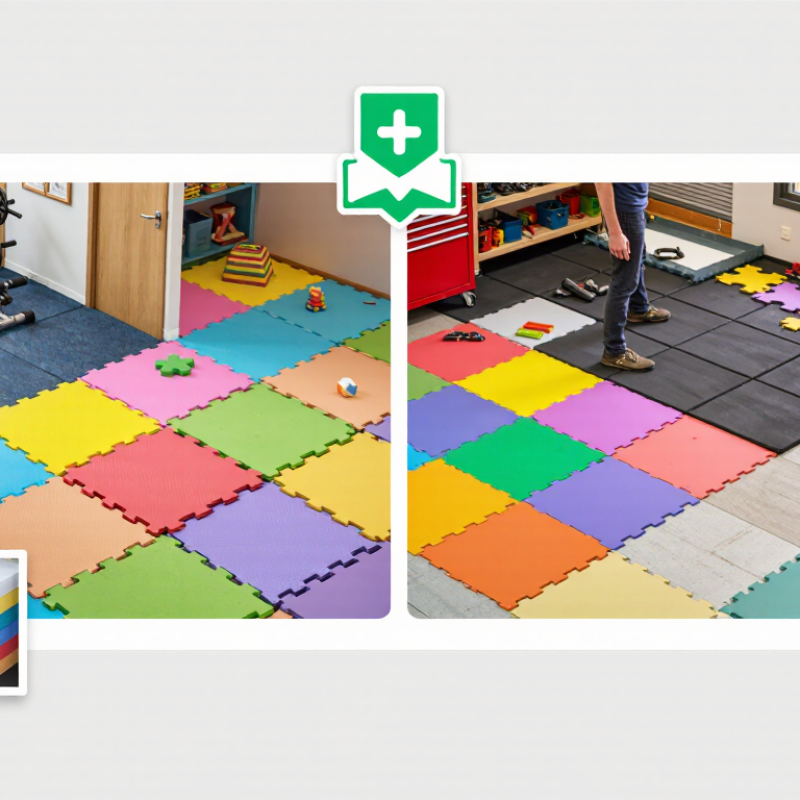
Foam tiles are lightweight panels designed to soften hard surfaces. They are commonly made from EVA or polyethylene foam. These materials contain tiny cells that provide cushioning and moderate insulation. During production, manufacturers mix polymer pellets with colorants and additives. Heat expands the material, then molds shape it into sheets or interlocking pieces. Some tiles receive a textured surface for improved grip.
The process is more controlled than it may appear. Density, thickness, and cell structure affect comfort, durability, and water resistance. After cooling, large foam sheets are cut into equal tiles. Edges may be shaped with puzzle-like teeth. This design allows fast installation without glue or permanent fixing. Foam tiles are used in exercise areas, children’s playrooms, workshops, trade displays, and temporary flooring. They can reduce pressure beneath knees and protect objects from minor impacts. Some also limit echoes in small rooms, although they are not professional acoustic panels.
A clean, dry floor matters.
Dust can weaken the fit.
Foam tiles are not indestructible. Sharp tools, heavy furniture, direct sunlight, and excessive heat may cause cuts, dents, or shrinkage. I have found that thicker tiles feel safer underfoot, but they may separate more easily on uneven floors. That trade-off deserves attention before installation. Regular cleaning with mild soap usually works, while harsh chemicals can damage the surface.
Foam tiles are not one uniform product. EVA interlocking tiles are common in playrooms, home gyms, and temporary work areas. They are lightweight, water-resistant, and easy to cut around furniture. Their puzzle edges install without adhesive. However, thin EVA can dent under heavy equipment or sharp furniture legs. It may also expand slightly in warm rooms.
High-density EVA and XPE foam tiles offer firmer support. They suit exercise spaces, workshops, and children’s activity areas where cushioning matters. XPE usually feels more closed and resilient, while EVA often provides a softer surface. Tile thickness changes comfort significantly. A six-millimeter tile feels very different from a twenty-millimeter tile. Check the floor underneath, too.
Acoustic foam tiles are another category. They usually contain open-cell foam with angled, grooved, or pyramidal surfaces. These shapes help reduce echoes in offices, studios, and meeting rooms. They improve sound absorption, but they do not fully block noise between rooms. Carpet-topped foam tiles add warmth and a cleaner appearance, although their fabric surface needs more careful cleaning. In practical installations, mismatched tile edges and uneven subfloors cause more problems than expected. I have also seen people choose maximum softness, then struggle with unstable footing during workouts. The better choice depends on impact, moisture, cleaning habits, and daily traffic.
| Foam Tile Type | Typical Material | Common Thickness | Typical Uses | Main Benefits | Important Considerations |
|---|---|---|---|---|---|
| Interlocking EVA Foam Tiles | Ethylene-vinyl acetate (EVA) | 6–25 mm | Playrooms, home gyms, exercise areas, temporary floor protection | Lightweight, cushioned, water-resistant, easy to assemble and remove | Can dent under heavy equipment; seams may separate if the floor is uneven |
| High-Density Gym Foam Tiles | Dense EVA or cross-linked polyethylene (XPE) | 10–30 mm | Yoga, stretching, bodyweight training, light workout zones | Provides impact cushioning and thermal insulation from hard floors | Not ideal for sharp equipment, dragging loads, or concentrated heavy weights |
| Children’s Play Foam Tiles | Soft EVA foam | 10–20 mm | Nurseries, play areas, activity rooms, and early-learning spaces | Softens minor falls, creates a warmer surface, and is simple to clean | Requires regular cleaning; small detachable pieces should be kept away from very young children |
| Tatami-Style Foam Tiles | Textured EVA or XPE with a woven-mat appearance | 10–20 mm | Martial arts practice, meditation rooms, play spaces, and home interiors | Comfortable underfoot, slip-resistant texture, and visually softer than plain foam | Texture can collect dirt; cushioning is generally less suitable for heavy-impact training |
| Anti-Fatigue Foam Tiles | Nitrile rubber, PVC foam, or blended resilient foam | 10–25 mm | Workstations, workshops, packing areas, kitchens, and standing desks | Reduces standing fatigue and provides cushioning for prolonged work | Oil, heat, moisture, and slip resistance vary by material and surface design |
| Acoustic Foam Tiles | Open-cell polyurethane or melamine foam | 25–75 mm | Recording rooms, voice booths, offices, media rooms, and podcast spaces | Absorbs mid- and high-frequency reflections and helps reduce echo | It controls reflections rather than fully blocking sound; installation and fire-rating requirements matter |
| Underlayment Foam Tiles | Polyethylene (PE), XPE, or polyurethane foam | 2–10 mm | Under laminate, engineered wood, and some floating floor systems | Adds minor cushioning, reduces some footfall noise, and helps smooth small surface irregularities | Must match the flooring manufacturer’s requirements; too much compression can damage floor joints |
| Protective Packing Foam Tiles | Closed-cell PE, XPE, or expanded polyethylene foam | 5–50 mm | Equipment cases, storage drawers, shipping protection, and surface padding | Resists moisture, absorbs shock, and can be cut or shaped for a close fit | Load-bearing performance depends on density; prolonged compression may leave permanent marks |
Note: Thicknesses shown are common market ranges for general applications. Actual performance depends on foam density, surface structure, installation method, temperature, moisture, and the manufacturer’s technical specifications.
Foam tiles are common in rooms where comfort, noise control, or surface protection matters. They create a softer layer beneath feet, equipment, or children’s play areas. In home gyms, people place them under exercise machines and free weights. The tiles reduce minor impact and make standing exercises more comfortable. They also protect floors from scratches and sweat, although seams may shift during hard workouts. That small problem is easy to overlook.
Children’s rooms, daycare spaces, and play corners use foam tiles for crawling, building, and floor games. Their padded surface can soften ordinary slips, but it cannot prevent serious injuries. Adults should check the material, thickness, and cleaning instructions before installation. Tiles with textured surfaces may offer better grip near activity areas. Yet, textured foam can trap crumbs and dust. Regular vacuuming and gentle wiping remain practical habits.
Workshops, garages, and standing workstations use foam tiles to reduce fatigue on hard concrete floors. They can make long periods of cutting, repairing, or packing less tiring. Some offices add them to temporary fitness areas or quiet practice rooms. However, foam is not ideal for every environment. Heavy furniture can leave dents, and direct sunlight may cause fading or warping. I have found that careful measuring matters more than expected. Leave expansion space, align the edges, and replace damaged pieces promptly.
Foam tiles are common in home gyms, children’s playrooms, martial arts studios, and temporary event spaces. Their interlocking edges create a cushioned surface over concrete or wood. In practice, installers value the quick setup, low weight, and easy replacement of damaged sections. A 12-millimeter tile can soften routine impact and reduce contact with a cold floor. It cannot replace professional shock-absorbing systems.
The U.S. Consumer Product Safety Commission reports roughly 200,000 playground-related emergency department visits each year. That figure explains the appeal of padded flooring around low climbing equipment. However, foam tiles do not guarantee injury prevention. Their protection depends on thickness, density, installation, and fall height. The CPSC’s playground guidance evaluates protective surfacing by critical fall height, not by softness alone. This distinction is often overlooked.
Foam also supports basic sound control. The material absorbs some reflected noise, especially in rooms with hard walls and floors. Yet it usually performs poorly against bass transmission and airborne noise between rooms. Moisture creates another weakness. Repeated spills can enter seams, causing odor, swelling, or hidden mold growth. Some products may also release noticeable odors when unpacked. ASTM fire-testing methods, such as ASTM E84, should be checked before commercial installation. My practical view is cautious: foam tiles work well for reversible, moderate-use areas, but heavy equipment, sharp edges, sunlight, and constant cleaning can shorten their service life. The cheapest option is rarely the most durable.
Foam tiles are used in home gyms, children’s playrooms, workshops, and temporary exercise areas. They cushion falls, reduce foot fatigue, and soften the sound of dropped equipment. Their value depends on the space, not just the pattern or price. A tile that feels comfortable under bare feet may compress too easily beneath heavy furniture.
For a home gym, choose dense tiles with enough thickness for jumping, stretching, and light weights. Interlocking edges should remain flat during movement. A playroom needs a low-odor, easy-clean surface with secure seams and suitable impact protection. Check the product’s safety information carefully. Softer foam is not automatically safer. In a workshop, prioritize resistance to oil, dirt, and repeated standing. However, many foam surfaces can be damaged by sharp tools or heavy rolling loads.
Moisture changes the decision. Closed-cell foam usually handles occasional spills better, but standing water can still reach the seams. Wet rooms may need a different flooring system. Measure the area before buying, and allow for expansion near walls. I once underestimated this and had to recut several tiles. It was avoidable. Look for clear data on thickness, density, cleaning methods, and slip performance. Test one tile under real conditions before covering the entire space. Pay attention to odor, edge movement, and how quickly dents recover.
Typical starting thickness for choosing foam tiles in different spaces
Thinner foam tiles are generally suitable for playrooms and light exercise, while thicker tiles provide more cushioning and impact protection for home gyms and workshop areas. These values are practical starting points; the final choice should also consider the floor surface, equipment weight, moisture, and required shock absorption.